Leadership in the Balance
“Out of every one hundred men, ten shouldn’t even be there, eighty are just targets, nine are the real fighters, and we are lucky to have them, for they make the battle. Ah, but the one, one is a warrior, and he will bring the others back.”
— Heraclitus
Most fire departments can be broken down into three camps of people: high performers, middle grounders, and low performers. This isn’t a measure of potential or ability, but more related to internal motivation and drive. High performers are not inherently better employees than low performers, they simply have the internal drive to push their performance beyond the minimum standards of the department. But, how do we know who falls into which group? Since humans are naturally poor at self-assessment, we need an objective way to see where we stand. A simple indicator is the effort put into daily tasks and skill development and our sentiment toward them. High performers put more effort than required into work and training yet feel as if they aren’t doing enough. Middle grounders do exactly what’s expected, but rarely take the initiative to do more, and feel content with their efforts and performance. Low performers do the minimum or less, and still complain because they feel like the organization is asking too much of them. Middle grounders will also lean toward the status quo of their company. One high performer in a company of middle-grounders will improve the overall performance of the company. Likewise, one low performer can bring everyone else down.
As a leader, especially at administrative levels, you must understand these groups and their values. High performers value higher standards of performance and the opportunity to challenge themselves and improve their performance. Low performers value lower standards and as few changes as possible to operations, not for simplicity, but because it avoids having to learn new methods and expose their weaknesses. Policies and department priorities will usually only please one of these groups. One side will always be upset. As a department leader, you must choose which one to cater to.
It’s easy to listen to the pushback from low performers and prioritize their demands. Lowering or eliminating fitness standards or eliminating performance reviews in promotional processes. They are the squeakiest wheels, so why not give them the grease. However, let’s consider the long-term effects of both approaches. Catering to the low performers will result in lower standards, mediocre performance, and a decrease in morale among motivated, higher performing employees who feel alienated by their department’s values. In today’s job market, where even the largest departments are begging for quality employees, alienated high performing firefighters are a commodity. High performers who are unsatisfied long enough will eventually move on to a department with values that match their own, and in many cases those departments are actively seeking out and recruiting those personnel. However, if we take the opposite approach, cater to the high performers, and let the motivated boots on the ground shape the department’s priorities and values, we only alienate the low performers. The difference is that, if you have a decent hiring process, most low performers are quality people who are entirely capable of performing at a higher level if the department requires it. They will work to perform at the minimum standard, regardless of how high that standard is set. They aren’t typically poor employees; they just lack the ability to hold themselves accountable to a higher standard.
Competition breeds excellence and by letting the high performers set the example, the department as a whole improves, the service to the citizens is increased, and the risk to retention is lowered. It certainly isn’t the easy route, but leadership never is. However, a steadfast leader who leans on their best performers and lets them set the pace of the department can quickly change the organizational culture for the better. In a world where departments are struggling to recruit and retain good people, it could make all the difference.
Share:

Misadventures in Leadership
Recruitment and retention have become a constant struggle for fire departments (and most employers) nationwide. At a time when departments are offering sign-on bonuses and actively recruiting for lateral hires from other departments, it’s surprising to see that some administrations still lead their entire department via authoritarian control. The “keep your mouth shut and just do what you’re told” mentality is sometimes warranted, but generally reserved for probationary firefighters who are still learning the ropes or a few perpetually poor performers. When applied to an entire department as a whole, it results in an immediate crash in morale and an exodus of good employees.
Servant leadership is a more effective approach that creates pride and ownership in the organization, while developing future leaders throughout the department. The administration need only instill a positive culture and citizen first mindset, like the “lines on the side of the road” and the direction it’s heading. Once the mission is understood, the administration can trust their subordinates to make sound decisions. Chiefs should push decisions as far down the chain as possible. A good rule of thumb is: if the decision won’t affect the way that you do your job, then you shouldn’t be making it. Pass the decision down to a committee of line chiefs, company officers, and firefighters. The command staff should guide them by providing insight on budget and long-term plans that they may not be aware of, but leave the choice up to them. The Chief still has final say, but if the department has a shared mindset, the committee’s decision will probably be similar to the one the Chief would’ve made anyway.
This approach has several positive side effects. Firstly, it eliminates the “them vs. us” atmosphere that plagues authoritarian departments. The line personnel made the decision, so there is no “them”, it is only “us”.
Secondly, it exposes those personnel to all of the factors involved in making the decision. This transparency and context is often missing from decisions that cause unrest in the ranks. Many administrators dislike hearing the question “why” from their subordinates. However, it is typically not a case of questioning the validity of the leader’s decision. Most often, subordinates are simply trying to understand why the leader made that decision, so that they can learn from their thought process.
Lastly, it provides subordinates with command-level decision making experience, preparing them to rise through the ranks. This is imperative, unless your command staff plans on working for 100 years. Eventually the Chief will retire, and if they’ve made every single decision for their department, then it’s unlikely that any of their subordinates will be adequately prepared to take over. A storm of disorganization and unnecessary mistakes will be left in their wake.
Shared ownership, transparency, and communication are pathways to a successful department culture. A lack of those traits, or the deliberate removal of them, will lead to low morale and high turnover. Department administrators may run their organization however they see fit as long as they’re in charge. However, departments that ascribe to the “do what you were hired to do and shut your mouth” mentality should at least add that mission statement to their job announcements. It would save good candidates the trouble of wasting years of their career at a toxic department with poor leadership, and there are plenty of good departments who would be glad to have them.
Share:


As much as we talk about being focused and into the job on duty, it is equally important to decompress off-duty.
Like most of you, the fire service is not just my job, but my chosen trade. I devote a lot of my spare time off-duty to improving my fireground performance. From attending classes, to getting extra practice dialing in skills, to focusing on physical fitness.
Becoming truly proficient in all areas of this craft requires discipline and dedication, beyond the required minimum set by the department.
However, it’s easy for the scales of work/life balance to tip over leaving us, and our families, burned out. It’s important to keep our priorities in the right order.
Take time to do things you enjoy, spend time with family and friends, get away. Do good work, on the job and off.
Share:

Spontaneous Drill
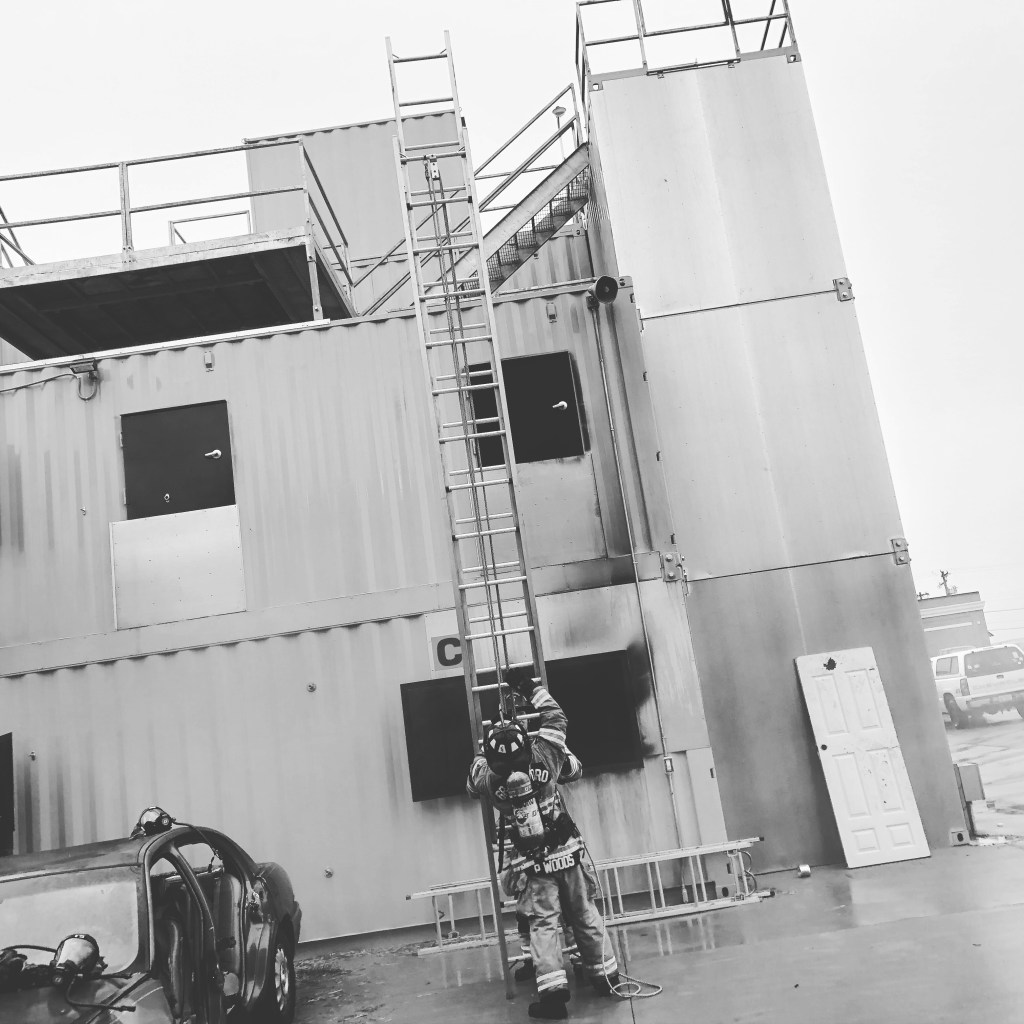
In talking to firefighters from across the country, I’ve run into stories of company officers who chastise or even formally discipline their firefighters for setting up drills on their own in the firehouse. Even worse, sometimes it is the senior firefighter being reprimanded for drilling with the junior member of the company. As someone who often spends time getting reps on my own, this is frustrating to hear.
If you are an officer who is guilty of this, take a second to call yourself into your office and give yourself a write up. If you forbid firefighters from masking up, throwing ladders, or stretching lines on their own because setting up training isn’t their job; you are doing nothing, but hindering the progress of your team, demoralizing them, and ruining any initiative they have to better themselves. It is a sign of weak leadership ability and you shouldn’t be surprised when your team starts to fall apart and perform poorly.
It takes hundreds of repetitions of a single skill to become proficient and reach a level of autonomy (which allows for performance under stress). It takes thousands of repetitions to reach mastery.
If your personnel want to take the time to get those reps when they have a spare moment in quarters, encourage it. Even better if the drill started as your senior firefighter grabbing the junior member off the couch to get after it. A senior member willing to motivate the junior members without your direction will go a long way in strengthening your team and take some of the load of leadership off your shoulders. The easiest team to lead is a team who motivates themselves.
Embrace the “lone wolf” putting in work on the bay floor. Encourage them, or better yet, join in. Let them lead the rest of the company through the skill. Junior members aren’t junior members forever. The earlier you give them leadership experience, the better they will serve you as a senior firefighter, and eventually company officer, down the road.
Disclaimer: For junior members, this goes for drilling on skills that you have already developed a baseline understanding of through formal training with an instructor or your officer. If you have less than five years on the job and you run across a video or article with a skill you want to try, it’s a good idea to vet it with your officer or senior firefighter first. They can make sure that it is relevant to your local operations and watch your initial performance to coach you through learning the skill for the first time. Also, it may be something new to them and the entire company or department could benefit from learning it.
Share:

The Thousand Mile Road

“Step by step walk the thousand-mile road.” – Miyamoto Musashi
The process of skill development is a thousand-mile road, from novice to competence to proficiency to expert/mastery. Without diving too deep into the subject, the more that you develop a skill, the less you have to think about actually executing it. A common example is learning to tie our shoes. Initially, we have to consciously think about putting the laces in the correct position and in the proper order. Many of us used rote memorization (“the rabbit goes around the tree”) to expedite development through this novice stage. After many repetitions, we were able to tie our laces without looking at our shoes, though we were still consciously thinking about it. Eventually though, we performed the process enough times that it became a habitual process and we could perform it without dedicating any thought to the action (autonomy), freeing our mind to process other things like carrying on a conversation. On the fireground, autonomy in performing basic skills frees our cognitive processes for more important things, like sizing up the building and fire conditions.
As we progress in our skill level, we can begin to focus on strengthening more detailed areas of performance. For example, rather than carrying ladders on a flat, level drill ground or parking lot, practice moving up and down stairs, curbs, or grassy hills. Rather than always carrying a ladder on your right shoulder, work on the left side. Without the prior repetitions to develop autonomy, these changes in surface, grade, or position will require us to refocus our cognitive processes to negotiate them. To some, this level of detail may seem like splitting hairs, but the difference between competence, proficiency, and mastery is all about the details. As our abilities improve, we must critique them on a smaller scale if we wish to further improve. Otherwise, our performance will stall into complacency.
I recorded the following videos recently while working on left side ground-to-shoulder/carries and traversing stairs. The first repetition on the ground to shoulder is a perfect example of autonomy (muscle memory) as my brain attempts to follow the strong neural pathway developed by hundreds of reps to the right shoulder. I had to take a second to reset and mentally rehearse the left side movement before properly executing it.
Understanding the psychology behind skill acquisition is key to our abilities as both instructors (knowing how beginners learn and develop new skills) and as individual firefighters (understanding how we can continue to improve our abilities beyond mere competence for the length of our career).
Get weird. Get nerdy. Get better at your job.
Share:

Competence or Coincidence?

In 2008, Alex Honnold completed the first free-solo rock climbing ascent of Yosemite’s Half Dome, climbing the mountain’s 2000’ vertical face without a rope or other safety devices. At that point, he had committed nearly twenty years of his life to climbing. He was, without a doubt, “into” his craft. However, he decided to skip any serious preparation for the Half Dome climb, practicing the route with a rope just two days before his planned free-solo attempt. He hoped to bank on his decades of experience as a climber, rather than continue to prepare for the specific mission ahead. During the ascent, he ran into a tough section requiring a movement that he was not confident in performing. He froze and struggled to continue, but finally passed the obstacle and successfully finished. The climbing world lauded his accomplishment as a momentous achievement, but he viewed it differently. In a TED talk describing his climb, he stated, “I was unsatisfied…I knew that I’d gotten away with something. I didn’t want to be a lucky climber. I wanted to be a great climber.”
In 2017, he returned to Yosemite to attempt the first free-solo of El Capitan’s 3000’ rock wall. This time, he was determined to succeed through more than luck. He spent a year practicing the climb with a rope, breaking it into sections and repeating them until he knew each handhold by memory. During this time, he found a weak spot in his performance. To pass a part of the route, he needed to be able to reach out to a foothold with his leg, but found it to be difficult. To improve his flexibility for this move, he began a stretching routine which he completely daily for the year leading up to the climb. He went on to complete the climb smoothly and with much more confidence than at Half Dome.
Honnold worked everyday for a year to master a specific movement that he would perform just once on a single climb. He had nothing to gain, but his reputation and only his own life at stake. Donning an SCBA mask is a skill that we perform at every single fire and our speed and proficiency may mean the difference between life and death for the citizens we serve. Yet, how many of us take the time to practice this vital skill everyday, let alone every shift? The same may be said about stretching lines, forcing doors, throwing ladders, or performing searches. Lives literally hang in the balance of our ability to perform these skills quickly and flawlessly, but for various reasons we may fail to practice them regularly.
It is easy for us to fall into a rut where we begin to lean on luck rather than skill. Our state certification says that we are a firefighter, as does our job title and the badge on our uniform. We have shirts proclaiming our status on a fire department and maybe a sticker on our vehicle. However, none of these objects have any bearing on our actual skill level. We tout our years of service as a measure of our abilities, but it is the quality of the experiences during that time, and how we learned and grew from them, that truly matters. We slide to the side during training and don’t attend outside classes and conferences to avoid exposing our weaknesses. We feign proficiency so long that our ego allows us to believe our own charade. We go to fires and are successful, but are we skilled and performing well or are we just getting lucky?
Repetitive training aimed at attaining mastery, not just mediocrity, is the difference between competence and coincidence. A humble, honest, objective critique of our own performance, like Honnold’s, is the only way to expose our weaknesses, so that we may improve. We should strive to perform at our best for the citizens, our team, and our families at home. We must put forth the effort and action to achieve excellence, rather than rely on luck while hiding behind the facade of hollow words, excuses, and assumed capability. We don’t want to be lucky firefighters, we want to be great firefighters.
Share:

Into the Job
Are you into the job or just on the job? Being into the job means more than just a sticker on your truck or a t-shirt on your back. It is more than receiving a paycheck or having a pager. It means more than only training when it’s mandatory or only taking classes that are required for promotion. It means more than hitting the parking lot as soon as your replacement walks onto the apparatus floor. It means more than just sharing some motivational words on social media without ever putting the work behind living up to them.
Being into the job means working everyday, whether on duty or off, to get better. It means working to improve our strength and conditioning, so that we can work harder and longer on the fireground. It means drilling to develop our skills, so that we can perform them faster and more precisely under stress. It means continuously studying all areas of our trade.
To be into the job, we must do more than just talk, we must act. We must expose and acknowledge our weaknesses, then focus on strengthening them. We must take the steps necessary for improvement, even when they may be difficult. We must put the benefit to the citizens and our teammates ahead of our own comfort. We must strive everyday to be a little better than we were yesterday.
Set aside the excuses, stop talking about it, and just do it. Fewer words, more action. Get out of the recliner and get into the job.
Share:

A Short Note On Leaders

June 5, 1944. General Eisenhower speaks to airborne troops preparing to board aircraft for the invasion of Normandy. An iconic image of leadership.
As supreme commander of Allied Expeditionary Forces, Eisenhower could have easily remained hidden in a command tent. Instead, he chose to spend time with some of the men he was leading. Time to speak with them face to face, to hear their concerns, and to encourage them.
True leadership can not hide behind a desk or computer screen. It demands that you be willing to stand, both face-to-face and side-by-side, with those under your command. And if you aren’t willing to act like a leader, then you shouldn’t be surprised when nobody follows you.
Share:

Testimony
A little over a year ago, I had a short talk with a colleague about how we track our progress in fireground skills. When I was just a volunteer/part-timer, I realized that I simply couldn’t equal the skill acquisition of a career firefighter by training just one night a week. Even a mediocre full-timer would perform certain tasks more often through the course of 10 shifts per month. So, I started a log to record every time that I performed critical skills (stretch a line, throw a ladder, force a door, gloved mask-ups) during training or on the fireground. This helped me hold myself accountable, so that I could supplement those instances with additional repetitions on my own. The goal was to perform each skill a certain number of times every month, even if it wasn’t required during drills or calls. I continued logging reps after getting a career position. Although the need to supplement decreased, it still keeps me honest about how frequently I perform certain skills.
My colleague said that he did something similar and asked if I ever worked fireground skills into or around my workout program. For instance, practicing gloved mask-ups after completing some tough conditioning to simulate stress or cleaning ladders instead of a barbell. I told him that I occasionally worked out in gear, but that I didn’t really follow a “program”. I ran once or twice a month if I felt like it. I occasionally did push-up/pull-up circuits. Sometimes I’d do barbell work. However, there was no rhyme or reason behind it.
Later on, the hypocrisy of that statement weighed on me. “I don’t follow a workout program.” I was willing to spend so much time gathering knowledge of the trade and developing the skill necessary to apply it on the fireground. I had a binder of articles and notes from conferences. I had a notebook tallying every time I threw a ladder in the past year. Yet, I wasn’t willing to commit to a standardized program aimed at improving my physical fitness, the very attribute that would allow me to perform various physically demanding skills in quick succession and under stress.
I’ve always been a good distance runner. Endurance work is my safe space. If I decided to workout, I would almost always go for a run. I was good at running. It was easy. It was comfortable. Meanwhile, my strength was terrible and my anaerobic conditioning was only average, as I rarely pushed myself. I let the fact that I was skinny and could run far convince me that I was fit enough. I settled. Worse yet, I had a poor view of coworkers who were “out of shape”. How could I feel disdain toward others for not working to improve themselves if I wasn’t working to improve myself, as well? Rather than focusing on their shortcomings, I should have been pointing out mine. Working to be better than I was yesterday, in all aspects, and nothing more.
Last December, I changed that. I started following a standard, progressive program. I committed to three strength workouts per week and three conditioning workouts per week, regardless of my work schedule or other events. I try to get up early to fit my workout in before life’s distractions can get in the way. Sometimes I have to squeeze it in at night. Other days, I have to double-up on workouts. Either way, I get it done. I still have a lot of work to do, but I’m continually getting stronger and faster. Plus, I feel better on the job and in general.
As individual attributes; knowledge, skill, or fitness alone will only get us so far. In order to truly excel in this trade, we have to take a holistic approach. We must work to improve in all aspects of the craft, even the areas that aren’t comfortable for us. A fact that I’m still working on myself. Drive on and do good work.
Share:

The Loaded Bar

“All growth depends upon activity. There is no development physically or intellectually without effort, and effort means work.” – Calvin Coolidge
The loaded bar. Full of potential achievement, but meaningless until you put forth the effort to actually move it.
Much like our aspirations on the job, good intentions only get us so far. A drive and passion for the trade is vital, but only if we follow through by actually working to improve ourselves. It’s easy to talk about being “into the job”, but those words are empty unless we put in the work to back them up.
Knowledge, skill, fitness. Do something everyday to improve in each of those areas. You owe it to the citizens. You owe it to your teammates. You owe it to your family. Pay your dues.

 Excessive Leather Accessories For Firefighters