Prideful Ownership
The term “Pride and Ownership” isn’t new to the fire service. Hopefully, most ELAFF readers are familiar with it and understand its importance to successful company operations. Chief Rick Lasky runs the most comprehensive program on “P&O”, with a lecture program, a book, a blog, and an internet webcast show. These are all great programs, and you can find more info on them by clicking here. Recently, Rhett Fleitz (The Fire Critic) attended one of Chief Lasky’s seminars, and was spurred to write his own blog series on the topic (link to all posts here). He did a great job of explaining “P&O” as he understands it, and I decided to take the time to write a quick post from my point of view. Maybe other sites will join in and compile a number of posts on the subject, as they did with “Brotherhood”.
I’m going to try to make this one short and sweet. I know that we’ve gained a lot of new followers recently, and they may not be accustomed to my occasional “novel-length” posts, as Captain Chaos would say. I’ll simply break down those two words and their meaning to me.
PRIDE
Pride is a fickle beast. It can obviously be a great tool for company development, or Chief Lasky wouldn’t talk about it, but it can also be the downfall of an individual’s career. It should be noted that we are not really talking about “individual pride” here. Individual pride, or pride in oneself, is fine in limited amounts, but it can be toxic if over-applied. Too much individual pride will eventually cause us to put ourselves ahead of everything else. Ahead of our Brothers. Ahead of our company. Ahead of the civilians we serve. This can be seriously detrimental to the firehouse atmosphere. Be proud of your accomplishments, but never let that pride lead you to abandon your Brothers. So, what type of pride are we looking for?
The pride which “P&O” refers to is bigger than the individual level. We are talking about “company pride”, “departmental pride”, and “fire service pride”. We need to have pride in the bigger picture. If we have pride in our company, then we will be willing to go the extra mile to improve our company (or department). What if your company is the slow, outlying runt of the department? Perfect! What if your department is small, underfunded, and poorly motivated? Perfect! You have the perfect opportunity to display the effects of company pride. Start by leading the example yourself. Take some extra time to do some short drills/P.T., clean and fix up forgotten tools or repair a worn and broken area in the firehouse (every ‘house older than 1 year has SOMETHING broken). If you are a full-timer, do this after normal work hours, while the others are watching t.v. If you are a volunteer, do it on a night when there is no regular training and you aren’t assigned to a duty shift. You may be alone at first. You may attract remarks questioning the purpose of your actions. Hopefully, others will eventually join in. Once you build “company pride”, it becomes a nearly unstoppable force. Each shift wants to contribute more than the others, each company wants to work harder than their neighbor, each department wants to be the best, and we ALL want to make the fire service function better and more efficiently.
Jason Jefferies at Working the Job posted THIS article, which includes an email from a retiring Charlotte (NC) fireman. What is one of the things that stands out to me in this post? He doesn’t just refer to himself as “a fireman”, he repeatedly calls himself a “Charlotte fireman”. He doesn’t just hold pride in our profession; he has pride in his department. Officers and senior firemen, this is for you. Company pride is the key to your crews working harder, training more, and ENJOYING the job at YOUR department. Make sure that your crews aren’t simply “proud to be firefighters”. They should be “proud to be (insert your dept. here) firefighters”. This is huge for retention problems in both the paid AND vollie worlds. If your members are simply “firefighters”, they will have no problem leaving for another department if morale gets bleak in your ‘house. However, if they are proud to be “(insert dept. name) firefighters”, they will be hard pressed to leave under any circumstance. Chiefs and administrators, let your personnel build pride in their department. If they see a need for improving a piece of front-line equipment, let them do it. They know when something isn’t working, they use that equipment…you don’t. Their lives depend on the proper function of that equipment…yours doesn’t. Let them make the department their own. If they want to build tables and other firehouse items, encourage it. If they decide to start an impromptu drill, *GASP*, WITHOUT an officer…let them roll with it. Stop the micro-management, it stunts department growth, quells company pride, and buries morale in a grave of dissolved motivation.
OWNERSHIP
“Ownership” picks up where the “pride” leaves off. Once there is a fair amount of company pride developed, we begin to OWN our company. This means taking everything that happens to the company “to heart”. If something happens to the company, it happens to you. If a tool is dirty or broken, it is YOUR fault because that is YOUR tool. This doesn’t mean that those tools don’t belong to your Brothers, they should feel the same. If something isn’t right, you fix it. Take things personally. Don’t just be a member/employee of your department, make that department YOUR OWN. If every member makes that personal commitment to the company, there will be a dramatic improvement around the ‘house. This all goes back to “company pride”.
With that, I’ll end this post. Feel free to leave a comment, and don’t forget to “share” this post using the buttons below.
We have some big news coming up in the next month or so. Stay tuned and stay safe, “leather-freaks”.
Lt. Lemon
Share:

It takes experience to Master it…..
A few nights ago, I was watching one of my favorite movies in a series of movies: Red Dragon. You may be familiar with them, the fictional tales of the infamous Dr. Hannibal Lector, Will Graham and Clarice Starling. Most of you may familier with “Silence of the Lambs”, but there are several books and movies that go along with that particular movie in the series. During the movie, a certain scene stood out to me. It’s funny how a single line, or event witnessed, during the normal course of any day can suddenly bring about an idea completely out of the ball park of whats actually going on at the moment! The scene was when the main character Will Graham is visiting Dr. Lector in a bunker with an oval track in it for which he is allowed to “exercise”. The exercise consists of being chained and shackled to the inner part of the circle and Lector is allowed to Walk. The history between the two is a rough one, as it is Will who caught and arrested Lector, but not before Lector brings Will to the precipice of death with a Stiletto knife. Investigator Graham is trying to get Hannibal to assist him in catching another serial killer, who’s first killing went astray from what he had planned. He had to murder a man in a sudden rush of panic, because the man caught the killer in his home. Upon Grahams critique of the sloppy, ill planned murder, Lector asks Will if he himself has “never felt a sudden rush of panic?” after which, Lector lunges at Will. Due to his shackles and chain, Lector is stopped short, like a dog at the end of its rope mere inches away from Graham. Will retreats a bit, as fear grasped him. “Yeah, that’s the fear we talked about” Lector reply’s, amused at his own display, “It takes experience to master it.”
Our own Lt. Lemon talked about fear recently, and our need to master it in order to do our Job. And to accept it, use it, rather than brag on our t-shirts about how we have none of it. The line in the movie got my wheels turning. He is completely right. Hannibals little quote there, got me thinking on fear, and the experience it takes to master it. What kind of experience must we have, before we become masters of it? How much experience does it take? I thought about it for a few days before trying to write about it. I wondered to myself, If I am a master of my own fear. How would I know it? Are their different kinds of fear? I don’t know, as I’ve said before, I wont pretend to have all the answers, but lets talk about it together. I’ll give you some of my thoughts on it, and please be my guest and let me know what you think on the subject.
Fear in theory, from a firefighter perspective, should start on day 1. There should be a little bit, not much, when you walk into the firehouse. It should be mixed with anticipation, and maybe a little anxiety. “Will these guys accept me?” “will I get a call today?” “What the hell have I gotten myself into?” There should be a bit of all this when the pager, or bell, goes off for the first time. There should most certainly be a pang of fear crawl up your spine when you turn onto the street of your first fire, and see the tale tale glow coming from down the way, or you see the column of thick black smoke rising above the tree tops. Of course there are all sorts of emotions and feelings going on during these times, but intermixed in all these is Fear. Un-knowing to you, you have been learning to master it from the first time you ever saw a fire truck. You saw them going down the road, on the way to the un-known. Or maybe you met them at the station, patiently waiting on what’s to come today…. maybe tomorrow…. maybe thirty seconds from now. You saw them, knowing or learning about what they do, what they may be called upon to do at a moments notice and see no fear. Fire fighters. If you told someone off the street ” hey, sometime today your going to come face to mask with death and its going to be up to you to conquer his grip. The grip may be light today, it might be tight. But today, you will meet him.” Now assuming you’re a prophet, and not some lunatic grabbing people on the street and speaking on imminent demise and death, and this person believed you…. The fear would stay with them all day. Hell it would stay with them all week! But here these people are, goofing off, reading a book, cooking supper…. here they are standing with no fear in the face of what could happen today. It truly does inspire a bit of confidence. Now here you are, standing with them. They relieve your fear with a joke, or maybe a first day pep-talk telling you what they expect from you. All these little things, have already started helping you tame that fear. Standing along with these guys…. they have been doing this for a long time…..its gonna be ok. Little things, bit by bit by itty bitty bit start to tame that fear.
Training, from day one, assists you in the mastery of fear. Learning to tie certain knots, advancing hose lines, live burns. Riding down narrow streets at a speed you never even thought about doing in a CAR, none the less a 45,000 pound big red truck, But your driver is doing it with the ease of a casual sunday stroll. EMT training, looking at pictures and hearing stories of what others have done and experienced, and all other sorts of training all get you prepared for whats next. Slowly, one call at a time, seeing things, smelling and hearing things all in their own way help you in your quest of fear mastery. Whether your realizing it or not, it all builds up over time. Some fire fighters are lucky, they volunteer in a busy district, or get assigned a hopping territory right from the get-go. Some never see no more than a couple hundred calls a year, and there are those in-between who work their way into the busy areas. Each call, every job, every ride to the grocery store (if you get that damn nose out of your smart phone and pay attention), can teach you more and more about your job, your territory. Every aspect of what we do can be a learning moment if you let it. The more you learn, train, and pay attention to details, the more you master that fear.
Everyone is different though. The mastery of one fear for a firefighter may take many more experiences (or less) for another firefighter to achieve the same level of mastery. You will come to learn it on your own, and pay attention! Fear is something that’s more than an object to learn to go over like an obstacle in a confidence course. That fear, although mastered it may be, will always be there. It’s what heightens your awareness when you step out on a four lane highway. It touches you on the shoulder when you feel an amount of heat in a room that you’ve never felt before. It reminds you it is there when you ride a suicide attempt. It heightens your senses, and will melt away the iron in your fists when it is necessary. Un-checked, fear will lead to panic and a complete shut-down of all but your fight or flight instincts. A mastery of it, and it becomes a friend. A colleague that whispers in your ear when its time to go, when its time to fight, when its time to pay attention to what you’re doing. A two-edged sword that will cut the snot out of you when you swing it the wrong way, and the snot out of whom ever is in its path.
What do you think? I’m sure someone out there is ready to stand up and say, Hey Cap! I aint skeered! No fires gonna get me! Well, Brother, that’s good. Just don’t be on my line when the smoke hits the floor, and the little bit of light in the room left goes out. Because if the shiver of fear dont crawl up your back and whisper in your ear…. then consider the fire your own Dr. Lector. He’s there in the dark. His stiletto is sharp….. and waiting.
“So you were hurt not by a fault in your perception, or your instincts…. But because you failed to act on them until it was too late…..”
Dr. Hannibal Lector
Ta,Ta for now….. Stay safe, and ride hard
Capt. Chaos
Share:
Fear
“Courage is resistance to fear, mastery of fear—not absence of fear.” – Mark Twain
The above quote is one of meaning to those in our profession, as it is to all who put themselves in harm’s way for the sake of others. We call ourselves “the bravest”, evoking the image of courageous lads riding steam engines to extinguish blazes, as our predecessors once did. We plaster our “fearlessness” on our cars, helmets, and t-shirts. We advertise it to the world. Was this the case with those men over 100 years ago? Did they call themselves “brave”, or did their actions cause the public to bestow that title upon them? Were they more concerned with simply “doing the job”, rather than getting the glory? I’d like to believe so, but can we say the same for ourselves today?
For the most part, yes. There is still a large group of the fire service working for the right reasons. Those who remember that WE are here for THEM, the civilians, the public whom we SERVE. Those who remember that THEY are expecting us to rescue them. THEY are expecting us to put out the fire. THEY expect us to GO INSIDE. THEY expect us to be ready. Those with the right mindset ARE ready, but the right mindset does not require one to be fearless. In fact, the “fearless” mindset is as foolish as the “no entry” mindset.
It is time to correct the tired, old “We fight what you fear” cliché. The proper saying should be, “We fight what you fear, but we fear it, too.” Yes, firefighters FEAR fire, and why shouldn’t we? It is a fearsome element. Fire kills, has killed, and will continue to kill…and THAT is exactly why we must master OUR fear and continue to ENTER BUILDINGS for interior attack and search. As long as there is a chance of a life hazard, we owe it to the citizens, whom we SERVE, to make the interior attack and search. That is our JOB. Any random citizen can stand in the front yard and spray water through a window, Statter911.com provides a plethora of videos demonstrating this. The “green line jockeys” have even begun to gather “helmet-cam” style point-of-view footage. Imagine if your municipality began distributing 1 3/4″ lines to strategic hydrant locations in your response area. Teams of citizens could replace many “yard attack” departments. However, those average citizens likely will not go inside. That is the benefit that a good department brings to the table. We don’t just put the fire out and save the foundation. We come in to look for you, even if we don’t have a report of an occupant. We go in to put the fire out, and stop the damage before things burn to the ground. Obviously, there is some risk management to be considered and, at times, a defensive operation is required, but I don’t believe it should go nearly as far as some would like. But, back to the fear.
As I stated, we FEAR fire. If you’ve never felt a little twinge of fear as you make the push towards the fire room, then you: A) have never made an interior attack, B)are clinically insane, or C) just didn’t recognize it AS fear. You see, though firefighters and civilians both fear fire, there is a difference between the nature of our fears.
Normal, sane civilians fear fire in the most natural way. Fear through panic. They see fire or smoke, recognize the threat to their life, and react instinctively. Their brains shut down into the most primitive state. Their sole function becomes staying alive. Most flee for safety. This is good. It means less work for us, and most importantly…survivors, if they manage to escape the structure. If they don’t escape, we know that they will be near windows, behind doorways, or headed down hallways towards egress points. Others will simply hide, their brains conflicted to the point of freezing. This is also useful, as it gives us an idea of where a victim might hide. Under beds, in closets, in bathtubs. Knowing how possible victims might react can be invaluable to us, and there are many resources where you can read more on this subject. The fear-through-panic mindset is most evident in multiple occupant situations. We rarely hear of family members finding each other BEFORE exiting the structure. Part of this is because WE teach them to exit first. The other reasoning behind this may be that, in a fury of self-preservation, they completely forget about the other residents. They focus on getting out, and only upon exiting do they remember, as their brains restart, that there were others inside. Perhaps this is why we see more incidents where occupants re-entered to make a rescue, rather than finding the other victim in the first place. Or, perhaps they simply follow the escape plan and hope that everyone else does the same. Maybe it is a bit of both.
Firefighters, on the other hand, cannot afford to panic. We are trained early on to face our fear, master it, and use it to master the fire. We have a fear through respect. We know the destructive power of fire. We’ve seen it since the academy. Because of this knowledge, we train harder. We learn the behavior of fire and we study the effects of applying water to it. We learn how to defeat it, and to find those who cannot. We train on it…over, and over, and over…while we weed out those who will not. We master our fear…and master our ability to defeat its cause. This is why we feel excited when we conquer the beast, because we have, in turn, conquered our fear. It isn’t that we aren’t scared of the beast, it’s that we recognize and respect what will happen if we don’t overcome our fear and do our job. We know what will happen if we don’t make the search efficiently. We realize the outcome of not aggressively extinguishing the blaze.
We are not aggressive out of fearlessness and insanity. We simply realize that we serve a purpose greater than “saving the foundation”. We owe it to the public to perform to our full potential. It is what THEY expect…and what WE should deliver.
– Lt. Lemon
Share:
A Trip to See the King
This weekend, Captain Chaos joined me on an expedition. We were invited down to Roanoke, Virginia to visit the King of Blogs himself, Captain Willie Wines Jr. We loaded up the ELAFF-mobile and hit the road to Roanoke. Captain Wines was kind enough to set us up with a place to stay at a local family’s home. I never met his parents, but the kid who lived there was a huge fan of Willie’s…I think his name was Rhett-something. Apparently, he likes to ride his bike down to Willie’s station to hang out with the firemen, plus he’s a follower of our blog, as well. When he heard that Lt. Lemon and Cpt. Chaos would be in town, he begged his folks to let us spend the night. Rhett tagged along with us as we stopped by the Fallen Firefighter’s Memorial and were given an exclusive tour of Roanoke’s Historic Firehouse #1.
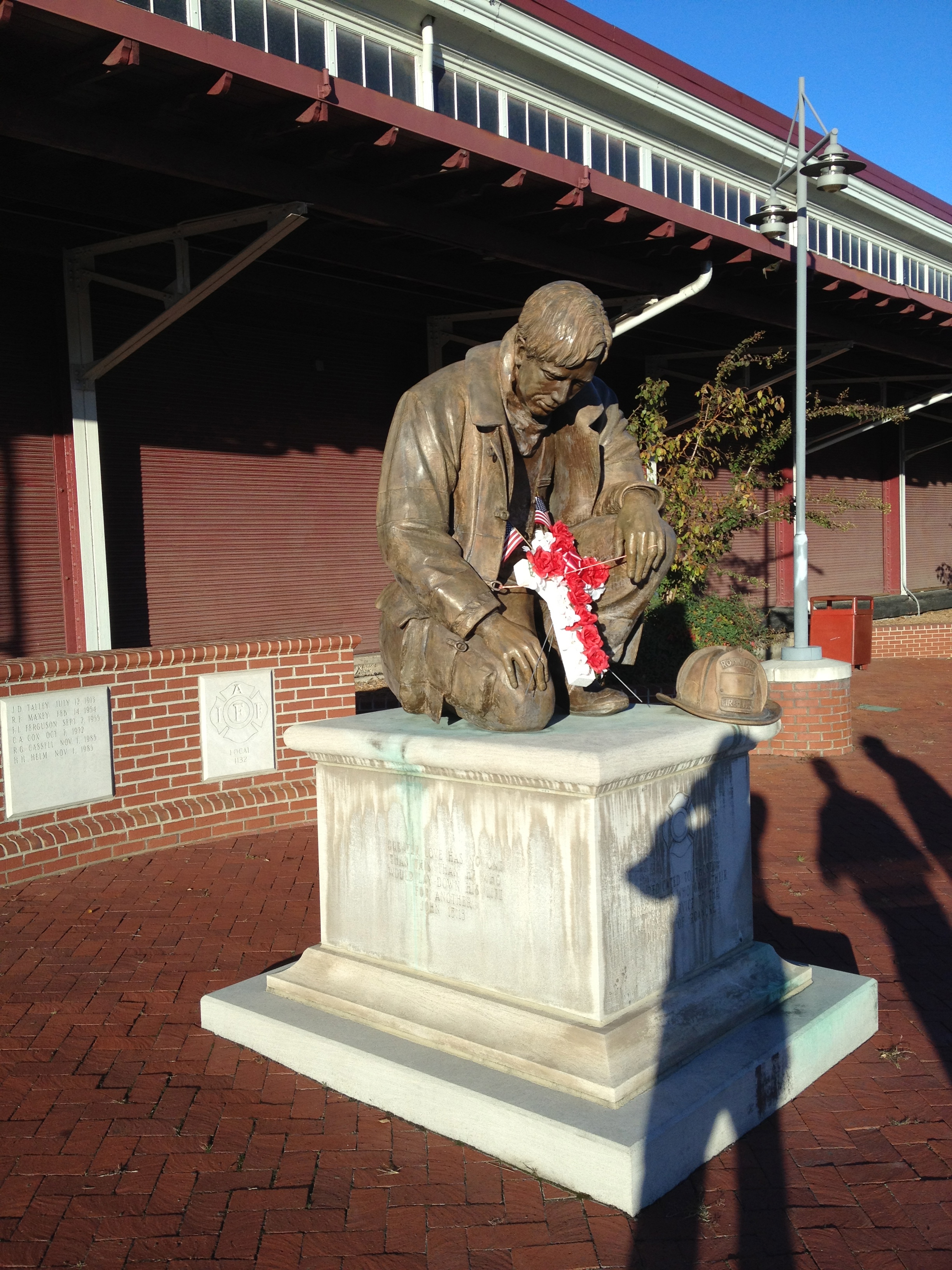

As Chaos and I marveled at the rich history in that house, Rhett spent the time constantly following Willie around and talking about something called the “Fire Critic” and telling us about “deals”. Frankly, I had no idea what he was referring to.
Meanwhile, as the kid kept talking, I remained silent, soaking in the wealth of knowledge shared by Captain Wines about everything from Roanoke Fire history, to general firefighting, to blogging and web design. I may be anonymous, but I will say that Captain Wines has much more experience than me, and I was taught early on to stay quiet and listen when good advice is offered from the senior men. After supper, we returned to Rhett’s house, where Rhett rambled on about “Va Fire News” and how much he loves Dave Statter. I think the only person Rhett admires more than Captain Wines is Statter. He could name every recent post on Statter911.com and he had an enormous Statter911 logo on his bedroom wall. It was sort of strange…
The following day, Chaos and I headed to Station 13 for a ride-along with Captain Wines and his crew. They greeted us with a feast of a breakfast, followed by a tour of the beautiful scenery in the surrounding area. We brought the ride-along curse with us, only catching one run…a medical. Still, we enjoyed the day, as the firefighters of Roanoke are extremely friendly and hospitable. Even as Chaos and I barged in on a Sunday, we never felt un-welcome. Rhett rode his bike down to the firehouse, bringing some BBQ for supper. I’m not sure where his Mom bought it, but it wasn’t too bad. After supper, Chaos and I decided to finally get out of their hair and head back to HQ. We handed off a couple of Lemon Wedges, snapped some photos, and rode off…better for making the trip.
Thanks again to Willie and Rhett.
Next time I’ll bring my voice with me…and maybe my face, too.

-Lt. Lemon
Share:

ELAFF Organization, or How It All Works
Over the past few months at ELAFF HQ, we’ve grown incredibly. Our number of readers and fans has increased rapidly, and apparently some of the newcomers are not clear on the way things work here. This is understandable, as we operate a bit differently than other fire service blogs. This post is my attempt to clear things up and make the ELAFF experience less confusing.
The ELAFF Story (abridged version)
The first thing every ELAFF reader should do is check out the “About ELAFF” page. That should go without saying, but I said it anyway…just to be sure. That page gives the VERY basic version of the ELAFF story. Simply put, I started a Facebook page named “Excessive Leather Accessories for Firefighters” on February 11, 2010. It was an inside joke about an “ELAFF Local” (that’s the term we use for firefighters at ELAFF HQ). I began by posting funny videos about firefighters, but soon realized that my audience encompassed a large percentage of “Locals”. I started posting more meaningful articles and videos, sometimes adding a quick, 420 character or less piece of my mind. In August 2010, the Lt. Lemon picture showed up and Da’ Lemon Wedge was invented (all part of the original joke). Skip ahead to early 2011. Though ELAFF posts often spoke of “we”, the Facebook page had always been a solo effort by me…Lt. Lemon. I wanted to start a fully functioning, standalone blog. I thought that perhaps my thoughts and rants would be more widely accepted at ELAFF HQ (where everyone knows my true identity) if I wrote them online. Typically, only the favored few are chosen and allowed to let their voice be heard at ELAFF HQ…the rest are treated like rookies and children, regardless of knowledge, experience, seniority, or rank. Moving on. I knew that I would have trouble writing substantial posts between my inevitable rants, so I recruited help…and on May 5, 2011, I launched the blog.
Authors
Yes, ELAFFHQ.com has more than one author. There are currently three writers involved in the ELAFF project. They are not separate pseudonyms for one person, although that appears to be a common misconception. Each article on this site is written ENTIRELY by ONE author. The author is identified by the signature at the end of the post. I am working on a more clear way to display a post’s author. The current writing staff consists of:
Lt. Lemon – Your’s truly. I am the founder and administrator of all things ELAFF. I am responsible for everything posted on the Facebook page and the @ELAFFHQ Twitter account. My comments on most sites are accompanied by the infamous Lt. Lemon photo-avatar. Everyone at ELAFF HQ knows (or should know) my true identity. Many bloggers and readers also know who I am. I continue to post anonymously because:
- Lt. Lemon isn’t only an alias, but an alter-ego, occasionally exaggerating my opinions for the sake of shock, awe, and satire.
- Revealing my identity, and therefore my location, could jeopardize the identities of my contributing authors, who wish to retain their anonymity.
- People enjoy mystery.
Captain Chaos – The Captain is…a unique individual. He is an ELAFF Local, but does not serve at ELAFF HQ. He writes in his own style, not always using the grammar and prose which I prefer, but he shares the ELAFF mindset. He currently wants to keep his identity quiet
Lt. Nobody – Nobody is our newest contributor. His motto is, “When something needs to be said or done, who does it? Nobody.” Like Chaos, he is an ELAFF Local, but he does not serve at ELAFF HQ. He wishes to remain anonymous, as well.
Lingo
ELAFF – (e-laugh) An acronym for Excessive Leather Accessories for Firefighters. It is easier to write and read. It is used to refer to the title of the Facebook page, the blog, or the writers as an organization. It is not the name of any of the individual writers.
ELAFF HQ – Refers to the department that inspired ELAFF. Also refers to the general area where I reside.
ELAFF Local – Someone who serves at, or near, ELAFF HQ and knows me personally.
Da’ Lemon Wedge – A yellow, wooden door chock with a specific design. Replicas can be made easily, but OFFICIAL Lemon Wedges are handmade at ELAFF HQ. So far, all Lemon Wedges have been made by me.
Future Improvements
My first planned improvement is to create a custom banner for each author, like those on Firegeezer.com, to be shown on each article. This would remove much of the confusion related to post authors. I also hope to drastically escalate the posting frequency, but things are busy at ELAFF HQ right now. We’ll have more on that, soon.
If you have any questions, suggestions, or complaints, email me at ELAFFHQ@gmail.com or use the “Contact ELAFF” page.
Thanks for reading,
Lt. Lemon
Share:
The Brotherhood is a Lie
That’s right. The title is referring to the Fire Service Brotherhood. Before you amass a posse and begin an assault on ELAFF HQ, I ask that you read this post to the last word. After that, please share your opinions…positive or negative.
I’ve been working on this post for a few months now. Until recently, it was merely a set of scattered ideas, floating around in my mind without a central focus to tether them all together. This week, I found my focus. A group of firefighters in Georgia uploaded a video to Youtube, showing an outrageous “rookie prank” which they carried out.
Here is the video:
My immediate thought after viewing this video was,”Wow…these guys are crazy!”
I planned on leaving it at that, with no further comment. As usual, I continued to follow the chatter on Statter911. I enjoy observing the varying opinions of Statter’s readers, and their reactions towards one another. The comments began to follow two, distinct paths.
The overwhelming majority of comments voiced disgust and disapproval. Those are the comments I agree with. The small number of opposing comments accosted the dissenters with accusations of overreaction and over-sensitivity.
I fail to see the supposed “innocence” of this “prank”. Ask any ELAFF Local and they will tell you that I am a supporter of firehouse fun and harmless tom-foolery. This prank, however, crossed the line. It may have caused mental trauma to the recipient, and even more likely, it could have resulted in serious injury or death. Don’t believe it? I’ll explain…
What if an off-duty member, carrying a legal and permitted concealed weapon, stopped by the station for a visit? How about a local law enforcement officer seeking a cup of coffee and some small talk. The city that this department protects has seen an increase in violent crime in recent years. If an armed firefighter or law officer entered the station to find his comrades being forced to the floor by a masked gunman, they would most likely react quickly. If they had entered the room as the firecrackers exploded, sounding like gunfire and adding to the realism of the mock execution, I’m sure they would have reacted aggressively. The ironic tragedy of a mock gunman being shot by an uninformed hero would have changed the tone of those supportive comments, and silenced any laughter.
Now, back to the Brotherhood and the focus of this post. There was one comment that veered to the extreme end of the supportive spectrum. It immediately struck a nerve and spurred me to tie those scattered ideas into a solid post. Here it is verbatim:
“You guys are such negative nancy’s. What happened to the brotherhood in the fire department? You are all too busy trying to throw them under the bus. What happened to innocent until proven guilty? As far as the prank being dangerous? I hate to tell you but F.D. Doesn’t mean fire department, but rather freaking dangerous.”
What happened to brotherhood? It doesn’t exist…it is a lie. At least, the “brotherhood” of which this comment speaks is a lie. It seems to be increasingly common for newer members of the fire service to EXPECT the brotherhood. They believe that as soon as they get some bunker gear, they are a solid link in the chain of fire service brethren…and that this link can never be severed. Nope. Sorry, it doesn’t work that way. The TRUE brotherhood between firefighters must be earned, and to keep it, you must stay true to the profession. You can get your issued t-shirt, or pager, or union decal for your truck…but that doesn’t make you a Brother. Don’t get me wrong. Senior firefighters should be there for the rookies. They should answer their questions, mentor them, even give them a little razzing when they get too cocky. Don’t shun the new guys, but make sure they know that they still have something to prove before they fully become a Brother.
Earning a place in the Brotherhood doesn’t require a working fire and an act of heroism, either. I recall a firehouse visit by a German fireman(feuerwehrmann). He spoke little English and had never stepped foot in our house before. We began to tour the station and apparatus; through broken English, hand signals, and my very basic understanding of German (thanks to my German roots) we began to communicate. His “detailed” questions about hose lays, pump rate, equipment, and tactics shone brightly through the language barrier. This was a Brother. He knew firefighting. He lived it. He didn’t leave it behind like a businessman on vacation. He didn’t ask lame questions about flashing lights and sirens. With less than 50 actual, spoken words…he EARNED my trust…and proved his status as a Brother. I assume that by gladly sharing our house and rigs, and by answering his questions with enthusiasm, pride, and knowledge…we earned HIS trust, as well.
Being a member of the Brotherhood goes beyond joining the department and wearing a t-shirt. It is more complex than simply wearing a pager and has no correlation to the amount of lights on your P.O.V. Being a member of the Brotherhood is about looking out for your Brothers. Putting them, and the civilians you protect, before yourself…and not just on the fireground. Being a Brother requires constant training. Brothers drop the remote and pick up the weights, so that they’ll be prepared for the next call. They take a break from talking about football at the kitchen table, so that they can run through a scenario or critique a previous call. Brothers take part in as much training as possible, even the courses that AREN’T required by the department. They spend spare time going over the rigs, looking for subtle changes which could make the next run flow a bit smoother. To Brothers, the fire service is more than a way to earn a paycheck, or a way to pick up chicks. It takes dedication and commitment to be a Brother. For that reason, not EVERY fire department member is a TRUE Brother Firefighter.
Too often these days, when news of a misbehaving firefighter hits the internet, some whacker-troll jumps out of the shadows screaming about the “brotherhood”. The idiots in Georgia may have been Brothers last week. Then, they pulled this “prank” and posted it on Youtube. They endangered themselves and made their department (and therefore the ENTIRE American fire service) a joke. They disgraced the Brotherhood, and thereby forfeited their privilege as a member. Yes, “privilege”. Not “right”. IF they are allowed to remain in this profession, they will have to EARN that privilege again.
To simply defend their actions because of the “brotherhood” is ridiculous. If a rogue firefighter decides to light a random house on fire for kicks, would you stand behind his actions because he’s a “brother”? What if he inadvertently killed somebody; would you support his act of arson under the veil of “brotherhood”? What if the victim was ALSO a “brother” firefighter?
I’ll stand by my Brothers through a lot, but when they start breaking laws and endangering lives, they go against the very morals that hold the Brotherhood together. I can’t consider someone like that a Brother, and I doubt they were ever one to begin with. If they had time to plan an elaborate stunt like the one above, then they also had time to train or hit the gym. They chose not to, and therefore chose to avoid the Brotherhood.
I have no problem with somebody supporting the “gunman pranksters” above. If you think it was a harmless prank, fair enough. If you think that no harm was done, fine.
Just don’t use the Brotherhood as your default defense. To some of us, it has a meaning which runs deeper than your superficial understanding.
-Lt. Lemon
(Credit to the following blogs for extra motivation and inspiration on this post: Jason Jefferies’ Working the Job, Chris Brennan’s Fire Service Warrior, and Taj Meyers’ QueenCityBurns. Read those posts.)
Share:
Radio Traffic Redundancy
Finally, I’ve gotten it together. Over three weeks ago, I announced that I was working on a new post. Unfortunately, I became side tracked by, what I have dubbed, “parasitic blogging”. Rather than express my views through an article on THIS site, I’ve been leaving a multitude of comments on various other blogs. Among those are Statter911, the Raleigh/Wake Fire Blog by Mike Legeros, and the Fire Critic. The added benefit of this is that my comments usually link back to this site. Free advertising…cha-ching! There are links in the right sidebar to the blogs which I read most frequently. So, if I stop posting for a while, you can most likely find me (and join the discussion) on one of those sites.
Moving on, this post is a light-hearted take on a most controversial topic…radio traffic. More specifically, the redundant phrases which infect agencies nationwide, wasting airtime and precious oxygen. I will begin by stating that I do not like “ten codes”. Period. They are useless and often confusing. If you would like to argue that, feel free to leave a comment below. You’ll still be wrong, but feel free to comment.
The first viral phrase of futility is a favorite of Mike Legeros. “Be advised…” is often heard preceding any important radio transmission. It sounds like an interjection designed to grab one’s attention before the announcement of pertinent data. In reality, it is usually utilized as a “filler” phrase, much like saying “uh” or “ah” when you aren’t sure what to say next. It gives the speaker an extra second (or two in the slow-speaking south) to gather their thoughts before speaking further. If it were necessary, then one should ignore any transmissions not preceded by “be advised”. If they don’t tell you to listen, then don’t. The fact is, listeners naturally know to listen and “be advised”, whether or not they are told to.
The second phrase up for discussion is similar. Have you ever heard command declare that the fire is under control, “at this time”? This phrase is used over and over, following almost any type of transmission. The question here is, would you ever transmit information which is not presently accurate? Would one ever advise that the fire was under control “five minutes ago”, or that the fire will be under control “in ten minutes”? Listeners automatically assume that your information is current, so it is ridiculous and redundant to state this. Taking this deeper, we can void this phrase using basic rules of grammar. When stating that “the fire is under control”, the word “is” signifies present tense, thus leaving no need for the additional “at this time”. Why waste the air time?
My final radio pet peeve runs rampant throughout the fire service. “Engine 50 on scene; two-story, ordinary construction, nothing showing from the exterior“. When is the last time anyone gave an initial size-up from the interior? The fact that you are describing the scene upon arrival clearly communicates that you are outside. So, why say it? Captain Chaos and I have often joked about giving a second size-up declaring, “Nothing visible from the interior, either”. We have yet to execute this, but I have not ruled out the idea. Don’t get me started on size-ups. Just for your information, “masonry” and “block” are NOT building types…there are five (and ONLY five) of those. You should have learned them in a basic building construction class. No other construction types should be used in a size-up. End of story.
I believe this is enough kindling to start a good fire of discussion. I’ll leave the redundancy of “RIT Team” alone. Actually, that one speaks for itself. I’ve always wanted to reply to command as the “Rapid Intervention Team Team” after hearing that. The same goes for “IC Command”…I’ve heard that one, too. They are ACRONYMS, people! I digress; leave your comments below and tell your friends to check this out. Use the buttons below to share via Facebook, Twitter, email, and now…Google +. You can also print a copy and post it at the firehouse.
– Lt. Lemon
Share:
Lessons Learned…..
The fire service has taken a few hits over the past couple weeks. Asheville Fire Department lost a veteran captain and brother to a fire in a medical building. Dallas Fire lost a brother as well when the roof collapsed below him as he was making the roof in an apartment blaze. Lt. Krodle, and Capt. Bowen along with their families, both blood and fire, are in our hearts and minds. Love you guys. I titled this blog as lessons learned, but the lesson has yet to be taught. I’m not talking about the lesson to be learned from the tragic loss of two brothers in the service we all love. I’m talking about the lesson that needs to be learned from pointing fingers, naming names, and playing the blame game ( or monday morning quarterbacking as I like to call it ). Its time for some hard words my friends. Theres nothing more infuriating to me, when I read other blogs, and listen to other firefighters when they sit back in their chairs and give their assessment on exactly what they feel was the cause of a tragic LODD. How can you sit there and play the blame game? Who the hell do you think you are? I PROMISE you that you’re not all that and a bag of potato chips when it comes to the fire service. Go ahead and listen to the Mayday from Asheville on youtube. Read some of the awful things some of our own brothers are saying about the situation. Can something be learned out of the ashes that we must sift through in order to try to make sense of what and how and why something went wrong? Yes. Can something be learned from pointing your dirty little fat sausage fingers at the men and women who worked that scene and took charge of that scene? Actually yes….. I’ve learned that there are a bunch of sorry ass firefighters out there that need to learn a lesson in humility, or maybe just a lesson in being a decent human being. You know NOTHING of what happened, how it looked, how it felt, smelled, or tasted. The ONLY piece of information you have, is excerpts of radio traffic you listened to over the internet. Its one thing to sit at the kitchen table, or in the watch room or out in the bays and talk about what MIGHT have happened, and what MIGHT we possibly do to adjust our own tactics and strategies incase something like this happened today. Knowing what we now know, what little that might be, what can we take away from this today to make sure that we go back to our home and families tomorrow? To me…. that’s how we make sure that someones tragedy does not go in vain. When you get online and spout ridiculous rhetoric out of your un-educated mouth ( well, typed from your un-educated fingers) for all to see, including im sure from those who actually were THERE, all you’re doing is spitting on the memories of ALL those loved and lost. Imagine the impact of your words on the people who were there. Walk a mile in THEIR bunkers for a while. You Dishonor yourself, and your profession with your filth. You should absolutely be ashamed of yourself, because im ashamed for you. Ashamed to call you brother or sister, and that you’re a member of MY family. Take a lesson from me right here, and right now. Keep your ridiculous assumptions to yourself, hang your head in shame, and get your ass on the rig when the tones go off. This is an honorable service you are being privileged to be a part of, so start acting like it.
R.I.P. Brother Bowen and Brother Krodle
Fraternally, and in Solidarity
-Chaos
 Excessive Leather Accessories For Firefighters